Practice closedClosed
Practice closedClosed
From the anterior cruciate ligament to the collateral ligaments
"An ACL rupture does not systematically require surgery. My decision is built with each patient, based on their age, sport and goals, with the GNRB test to objectively assess stability."
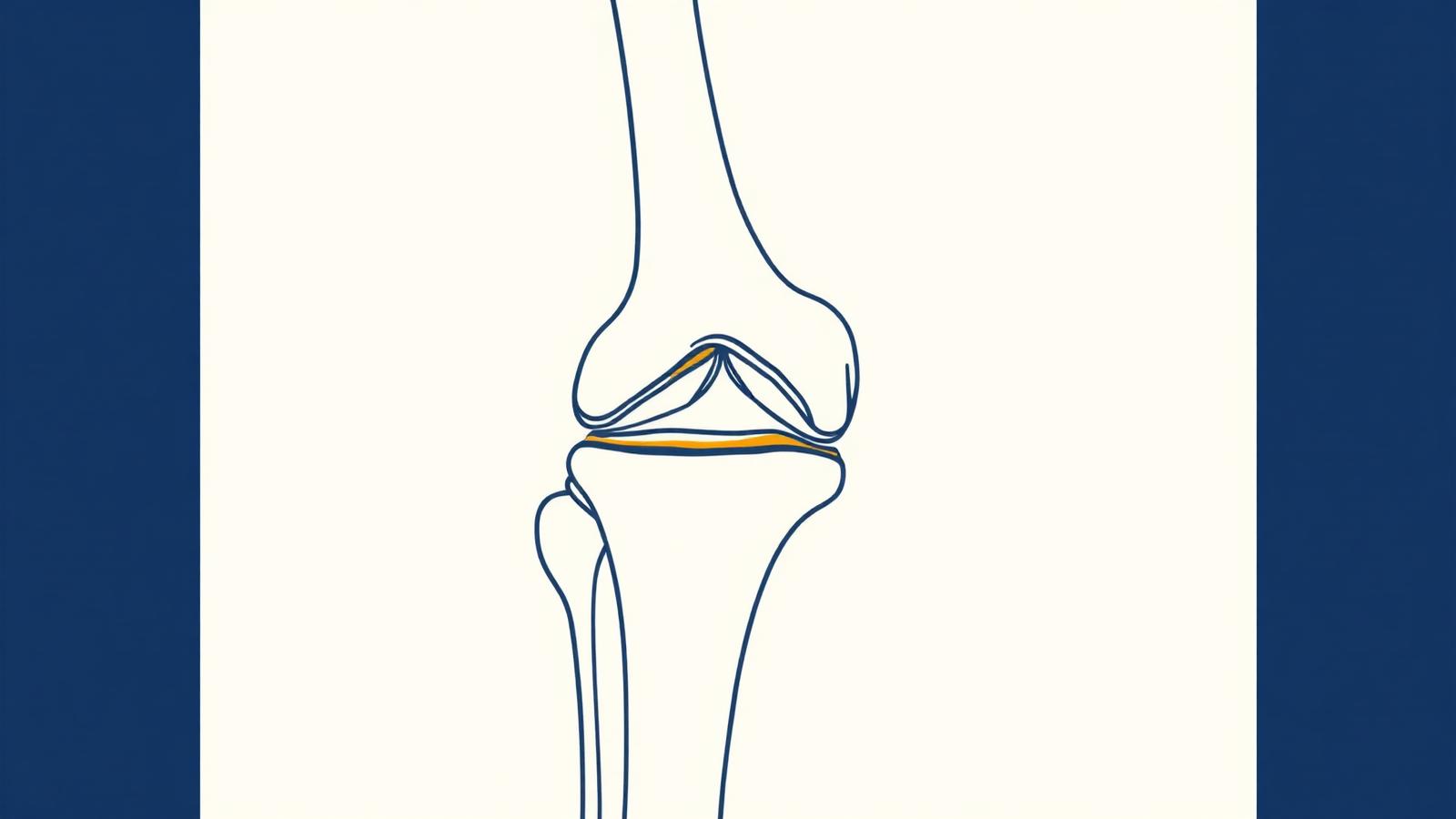
The knee has four main ligaments that ensure its stability by guiding movement and preventing abnormal displacement between the femur and the tibia. At the center, the two cruciate ligaments, anterior (ACL) and posterior (PCL), form the central pivot and control forward-backward displacement as well as rotation. On either side, the medial collateral ligament (MCL) and the lateral collateral ligament (LCL) control lateral stability. Trauma can injure one or more of these ligaments, with highly variable consequences depending on the structure affected.
ACL rupture is the most common and most iconic ligament injury, particularly in athletes. It typically occurs during a pivoting movement, a sudden change of direction, or landing from a jump, in pivot sports: football, rugby, handball, basketball, skiing. The patient often describes an audible pop, a feeling of the knee giving way, followed by rapid swelling of the knee (hemarthrosis, bleeding into the joint). Once torn, the ACL never heals spontaneously: the knee loses its central lock and becomes unstable, with episodes of giving way, especially during sports activities.
PCL rupture is much rarer. It generally results from severe trauma (direct impact on the tibia with the knee bent, road accident, contact sport). Its functional impact is often less than that of the ACL, and many isolated PCL ruptures can be treated without surgery, through rehabilitation. Treatment depends on the degree of instability and any associated lesions.
The collateral ligaments (medial and lateral) are frequently affected in knee sprains. Injury to the medial collateral ligament is the most common, caused by a movement forcing the knee inward. Most of these sprains, even complete tears, heal well with non-surgical treatment (brace, rehabilitation). Surgery is reserved for complex injuries involving several ligaments, or for residual instability.
Diagnosis is based on clinical examination, which tests knee laxity through specific maneuvers (checking for anterior drawer for the ACL). This examination is complemented by MRI, which confirms the ligament rupture and looks for associated lesions (menisci, cartilage). Dr Charousset also uses the GNRB laxity test, a device that objectively and reproducibly measures knee laxity by precisely quantifying tibial displacement. This quantified test is valuable to confirm the diagnosis, compare both knees, and above all to monitor progress after ACL reconstruction.
Treatment of an ACL rupture is not systematically surgical: it depends on age, level and sporting demands, perceived instability and associated lesions. A patient who is not very active, willing to adapt their activities, can be treated with rehabilitation (muscle strengthening to compensate for instability). On the other hand, a young, athletic patient wishing to return to pivot sports, or presenting with disabling instability, requires surgical reconstruction, ACL reconstruction.
ACL reconstruction involves replacing the torn cruciate ligament with a graft, taken from the patient themselves. Dr Charousset performs this reconstruction under arthroscopy. Two main techniques exist: DIDT (using the hamstring tendons, gracilis and semitendinosus) and Kenneth Jones (using the patellar tendon with its bone plugs). The choice between these techniques depends on the patient's profile, the sport practiced and preferences discussed during consultation. The graft is positioned precisely in place of the torn ACL and firmly fixed to recreate the central pivot and restore stability.
ACL reconstruction is performed as outpatient surgery. Rehabilitation is long and decisive: it first protects the graft, restores range of motion and strength, then progressively retrains the knee for the demands of sport. The GNRB test allows the stability achieved to be objectively assessed during follow-up. Return to pivot sports generally occurs between 6 and 9 months, once the graft has integrated and muscular and proprioceptive capacities have been recovered. Dr Charousset, who follows many athletes, precisely oversees this return to minimize the risk of re-injury.
Some videos contain surgical footage that may be disturbing for sensitive viewers.
Ligamentoplastie du genou (plastie courte TLS) et injection de PRP
Technique chirurgicale filmée et augmentation biologique.
Ligamentoplastie du genou expliquée
Émission grand public Allo Docteurs (France 5).
Le Dr Charousset vous reçoit à l'IOAPC, 23 rue de Courcelles, Paris 8e.